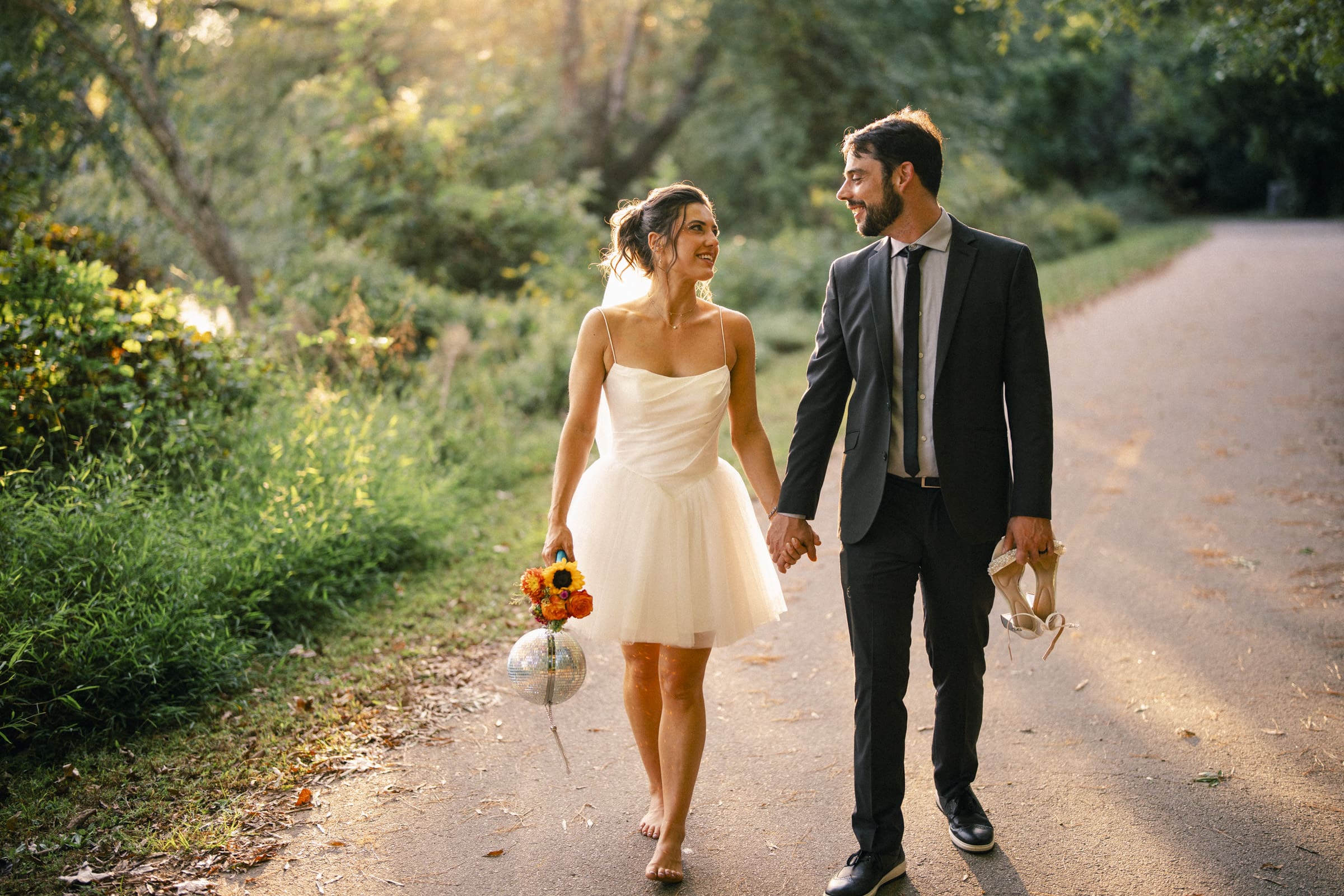
Planning a wedding in Raleigh, Durham, Chapel Hill or elsewhere in North Carolina often means balancing venue contracts, logistical spreadsheets, family expectations and a frankly ridiculous number of decisions.
Traditional wedding checklists are very good at telling you when to order invitations, book a caterer and finalise your guest list. What they often miss are the smaller, real-world decisions that determine how your wedding day actually feels.
After photographing weddings for more than 18 years, I’ve learnt that the best timelines don’t attempt to control every minute. They provide enough structure to keep everything moving while leaving room for the people, emotions and unscripted moments that make each wedding unique.
If you want your wedding to feel relaxed, connected and genuinely enjoyable—not like an elaborate production you have to manage—these three planning decisions can make an enormous difference.
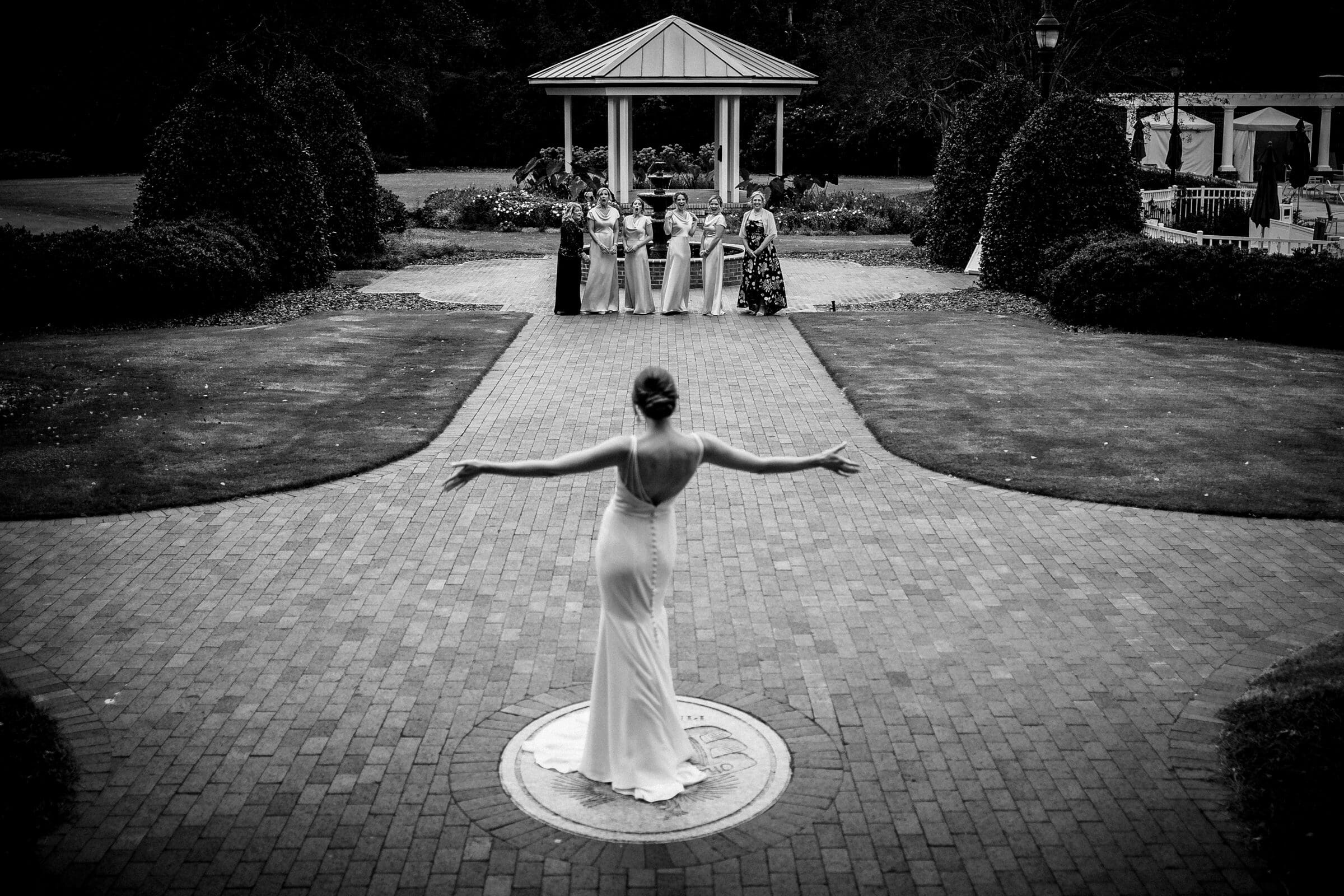
1. Build Breathing Room Into Your Wedding Morning
Wedding mornings have a rhythm of their own.
Hair and makeup take time. Friends arrive with stories to tell. Gifts are exchanged. Someone inevitably needs help finding an earring, fastening a dress or remembering where they left their speech.
Those aren’t necessarily problems. They are part of the day.
The problem is a timeline that assumes none of them will happen.
When the morning runs behind by 20 minutes, the delay can create an immediate domino effect. Getting dressed becomes rushed, the wedding party leaves late, portraits are shortened and everyone arrives at the ceremony carrying stress they didn’t need.
Aim to Be Ready Earlier Than You Think
I generally recommend working with your planner and hair and makeup team to have everyone completely ready approximately one hour before they absolutely need to leave.
If everything runs perfectly, you haven’t wasted an hour. You have gained time to eat something, pour a drink, exchange a gift, spend a few minutes with your family or simply take a breath.
It also gives your photographer space to document the moments that can’t be entered into a spreadsheet: a parent seeing you fully dressed for the first time, a quiet exchange between friends or the nervous excitement before everyone heads to the ceremony.
If the morning does run late, that buffer protects the rest of the day.
Choose the Getting-Ready Space Carefully
Couples naturally focus on the ceremony setting, reception room and obvious portrait locations when touring venues. The getting-ready space is often treated as an afterthought—even though you may spend four or five hours there.
Whenever possible, look for:
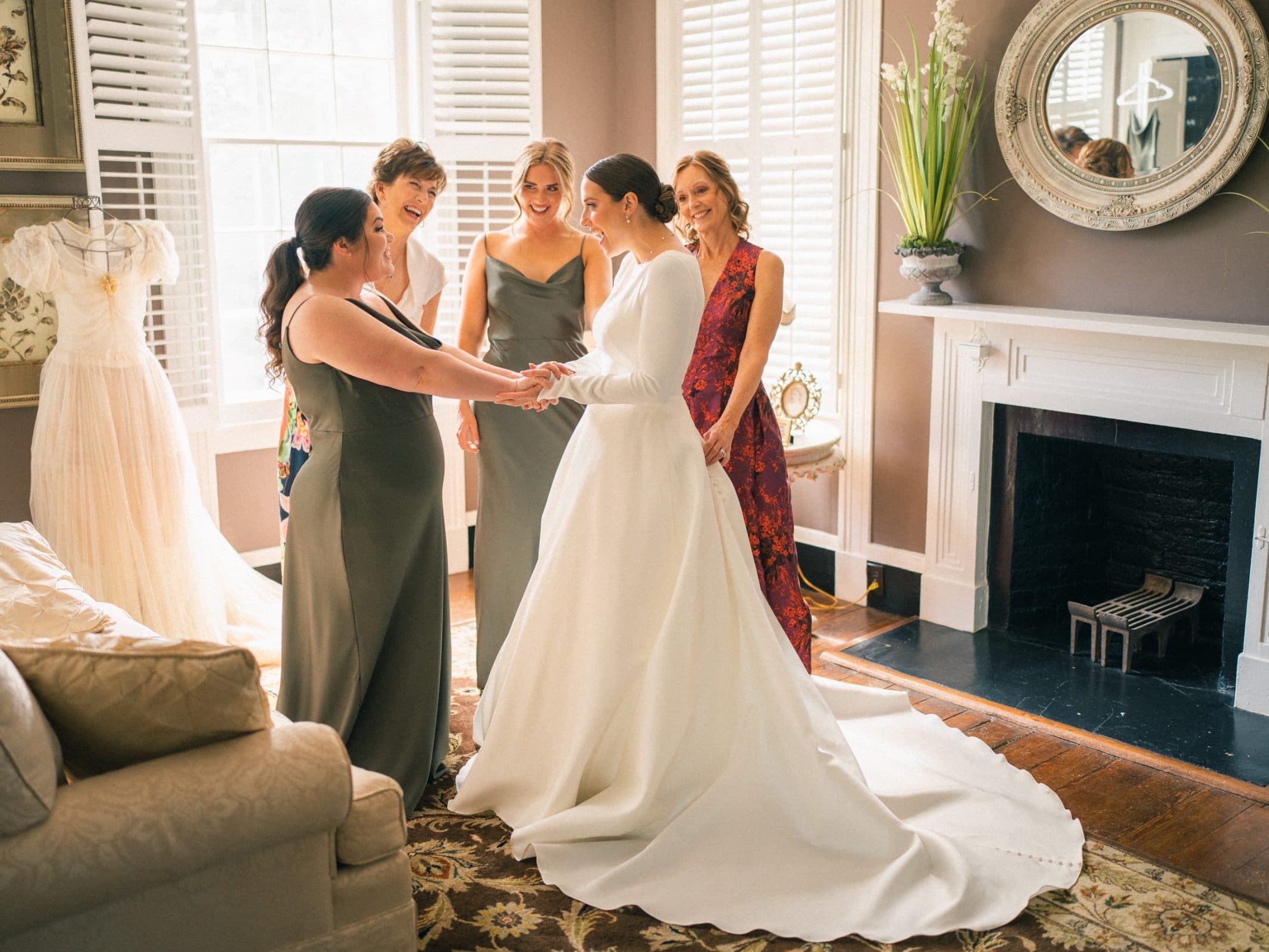
- Large windows and good natural light
- Enough room for your wedding party and beauty team
- Neutral or relatively uncluttered walls
- A separate place for bags, food and personal belongings
- Easy access to the ceremony or transportation
A cramped room with fluorescent lighting and luggage covering every available surface can make the morning feel more chaotic than it needs to. A spacious room with window light gives everyone room to work and creates a much calmer atmosphere.
If your venue’s suite isn’t ideal, a nearby hotel, home or rental property may be a better option.
The goal isn’t to manufacture a perfect getting-ready scene. It’s to create an environment in which the real moments can happen without everyone stepping over suitcases.
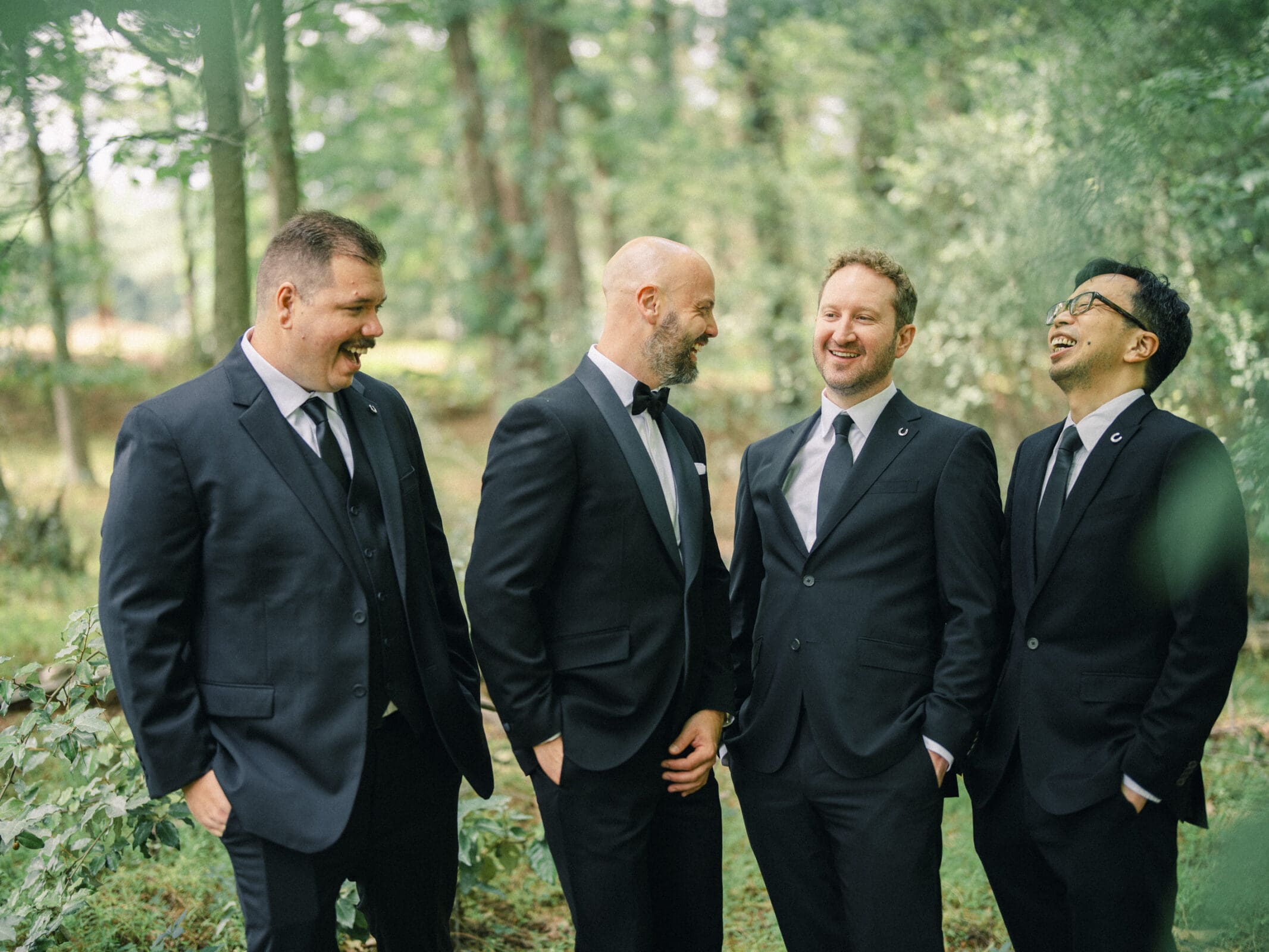
2. Plan Your Portraits Around the Actual Light
If photographs of the two of you are important, “we’ll take some after the ceremony” isn’t quite a plan.
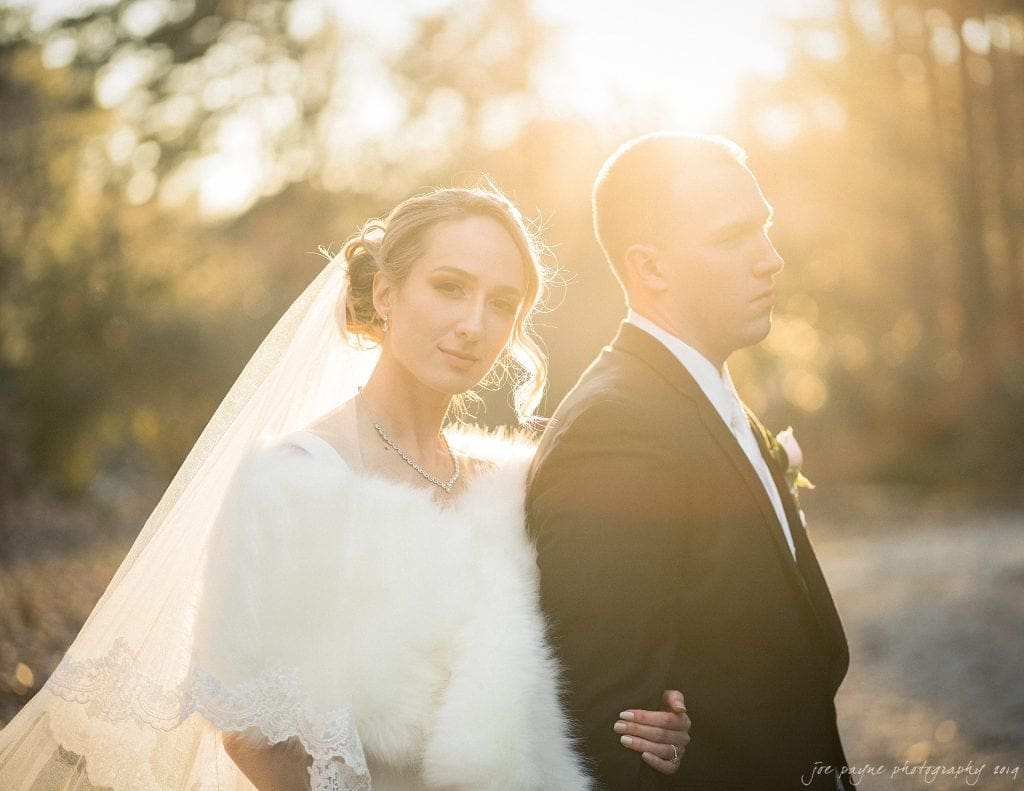
This becomes particularly important for late-autumn and winter weddings in North Carolina. A published sunset time of 5 p.m. does not guarantee beautiful natural light until precisely 5 p.m.
The sun may disappear behind trees, buildings or the venue itself much earlier. On an overcast day, usable light can fade quickly. By late afternoon, the difference between having 30 relaxed minutes and 10 hurried ones can be significant.
Work Backwards From Sunset
If you want to wait until the ceremony to see each other, that can work beautifully. You simply need to allow for everything that must happen before your couple’s portraits:
- The ceremony ending
- Guests leaving the ceremony area
- Any receiving line or immediate congratulations
- Family photographs
- Wedding-party photographs
- Travel to another portrait or reception location
- Time for the two of you to settle into being photographed
- The actual sunset and the environment around your venue
A 4 p.m. winter ceremony followed by family photographs and a drive to the reception may leave very little natural light for portraits. It doesn’t mean you must do a first look, but you should understand the trade-offs before the timeline is finalised.
If you’re weighing that decision, I’ve written a separate guide to the pros and cons of doing a first look.
Leave Room for Decisions on the Day
Your photographer may have preferred portrait locations in mind, but it is useful to retain some flexibility.
Weather changes. Timelines run behind. A quiet location may suddenly be occupied by guests. The light may look completely different from what everyone expected.
A photographer who knows the venue, understands light and has paid attention to the flow of the day should be able to make the final decision in the moment.
Plan the priorities in advance, but don’t feel compelled to lock every photograph to an exact location and minute.

Make Space for Golden Hour—When It Makes Sense
Golden-hour portraits can be beautiful, but they shouldn’t require the entire reception to grind to a halt.
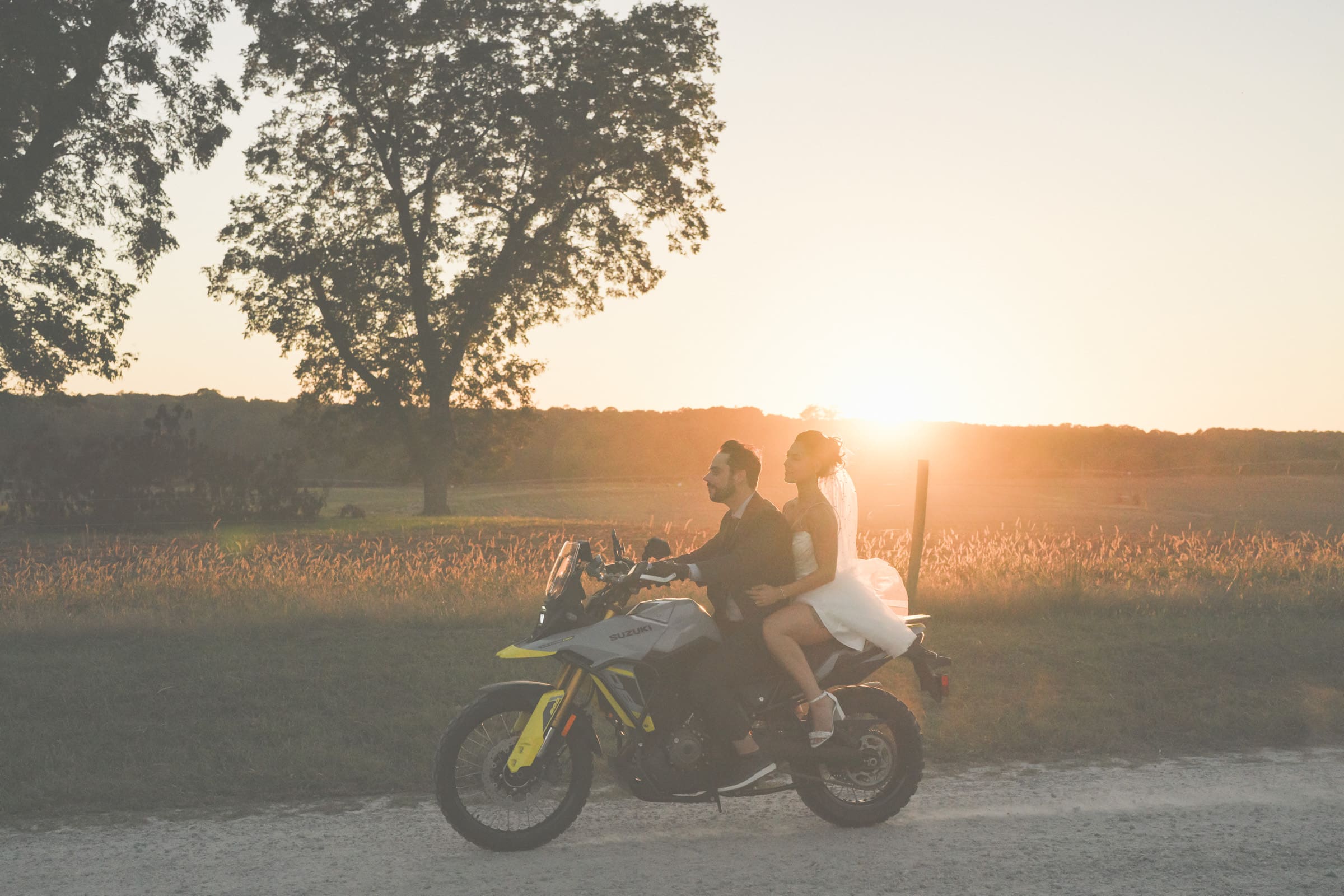
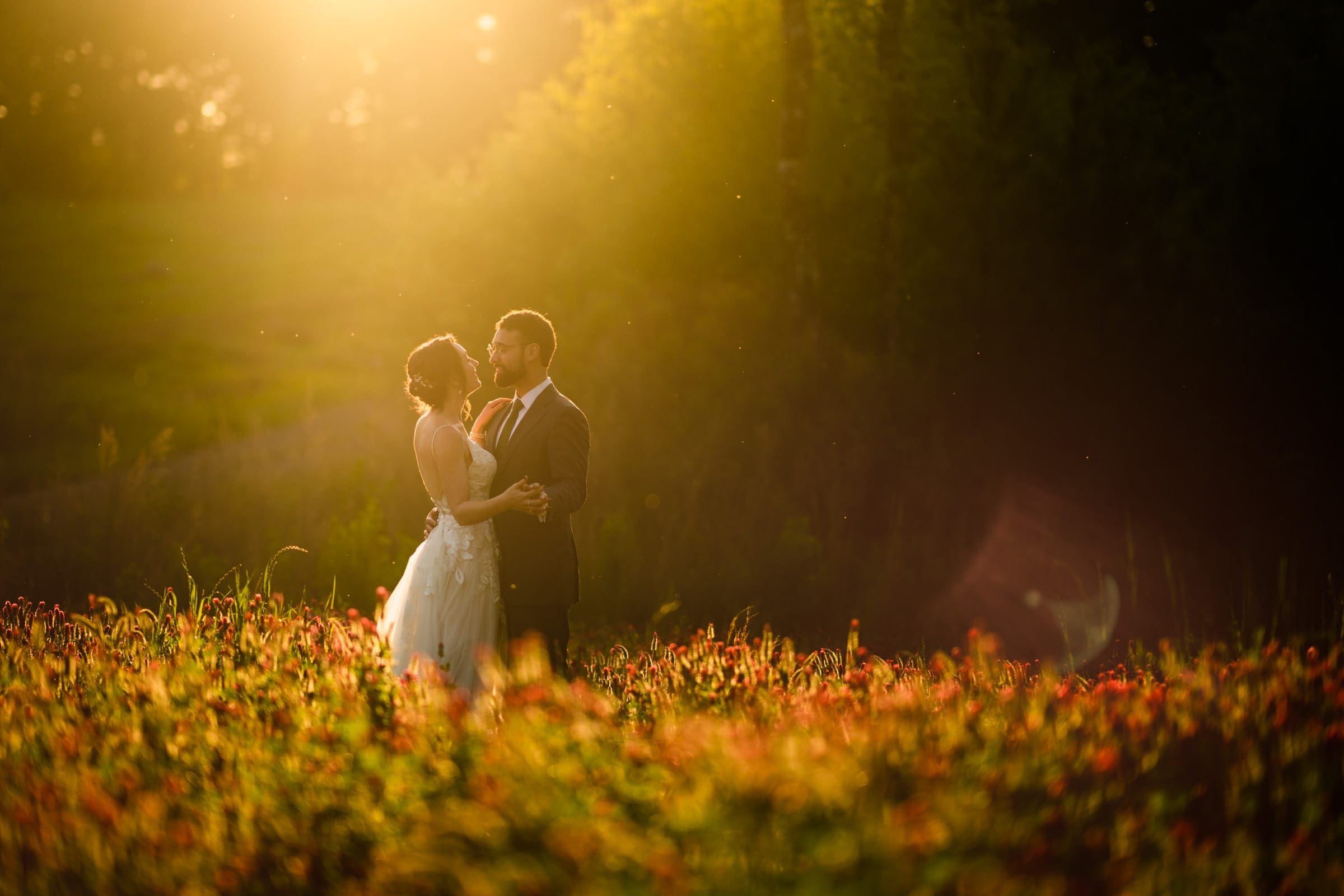
At a mid-June wedding in Pinehurst, the planner contacted me early to discuss the later sunset. We identified a natural break in the evening when the couple could step outside without missing something important or disrupting the reception’s momentum.
That collaboration gave us the opportunity to make a photograph the couple loved—and one the venue later licensed.
The lesson isn’t that every couple must disappear for sunset portraits. It’s that the best opportunities often come from planning thoughtfully while retaining enough flexibility to respond to the actual conditions.
3. Make Traditions Serve the Celebration
Some wedding traditions are meaningful. Others happen because everyone assumes they are supposed to happen.
Before adding something to your timeline, consider what it will contribute to your experience—and how much of the day it will consume.
Be Cautious With Receiving Lines
A receiving line sounds like an efficient way to greet everyone, but it can take far longer than expected.
Guests rarely limit themselves to a handshake and a quick congratulations. Conversations begin, introductions are made and the line stops moving. That may be perfectly worthwhile if a receiving line matters to you, but it needs realistic time in the schedule.
If portraits, travel or fading daylight are also competing for that period, greeting guests during cocktail hour or the reception may be a better option.
Turn Table Photographs Into a Game
Traditional table photographs can become another surprisingly lengthy exercise. Someone is invariably at the bar, in the bathroom or speaking to somebody on the other side of the room.
A much more enjoyable alternative is the one-song table challenge.
Pro Tip: The DJ plays one fast-paced song while the couple and photographer race around the reception, taking a photograph with every single table before the track ends. Everyone knows what is happening, guests participate enthusiastically, and the entire set gets wrapped up in a few energetic minutes.
You get a photograph with each group without spending a substantial portion of dinner waiting for people to return to their seats. You can then revisit guests later and have real conversations without stopping for another photograph at every table.
Keep Family Photographs Focused
Family photographs matter, but an improvised list can quickly consume cocktail hour.
Decide on the essential groupings in advance and provide the names of everyone involved. Assign a family member or friend from each side who knows the relevant people and can help gather them.
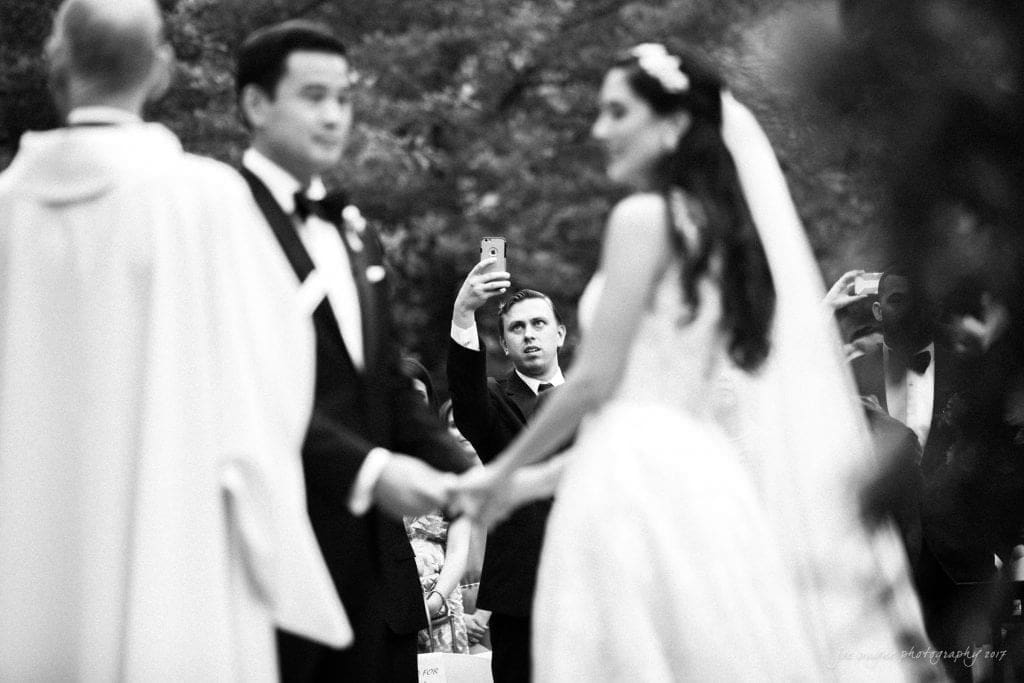
During the photographs themselves, guests should avoid standing beside the photographer with their own phones. Multiple cameras leave everyone looking in different directions, make the process take longer and create unnecessary confusion for the couple.
Group Your Reception Formalities Together
Receptions build energy through momentum.
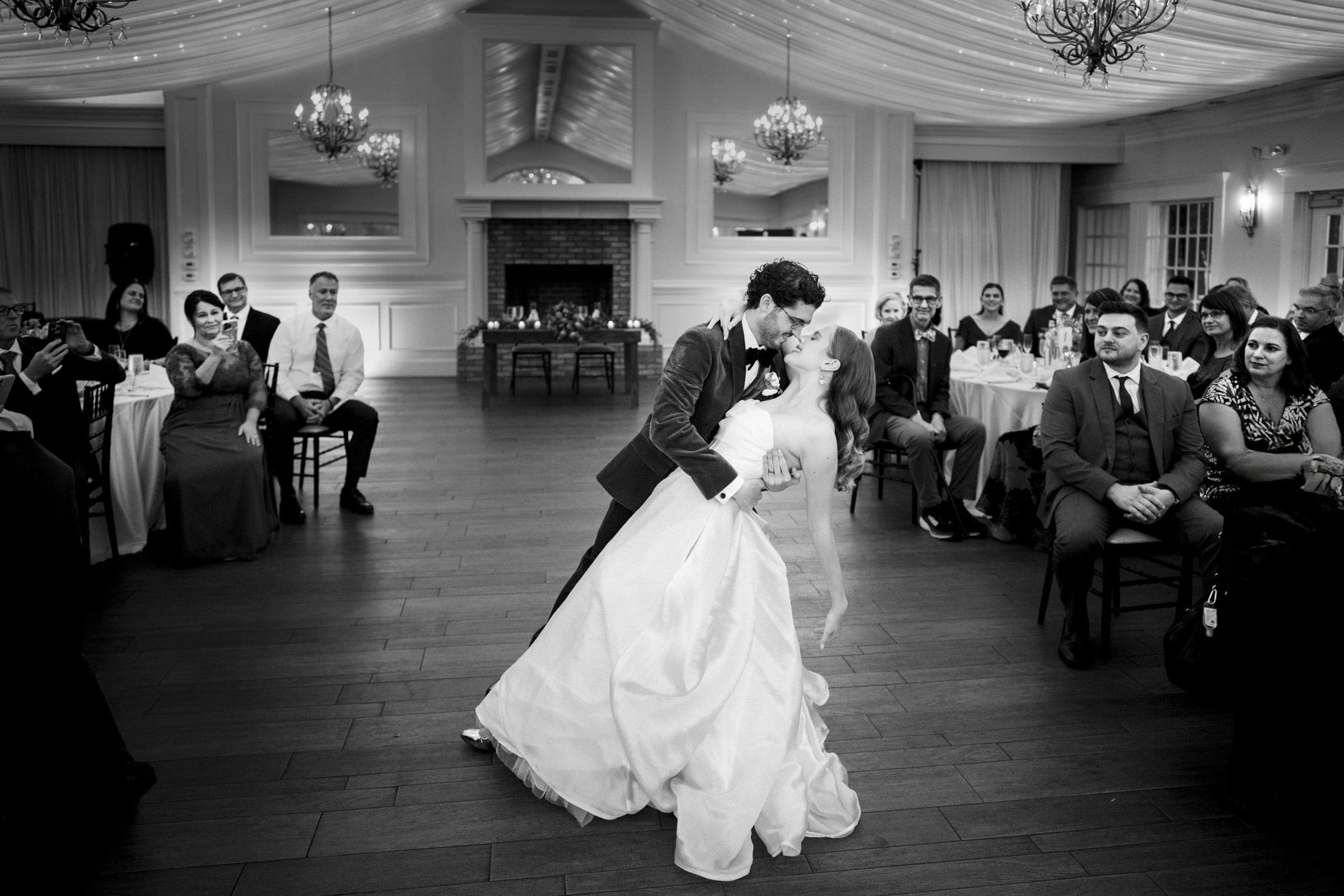
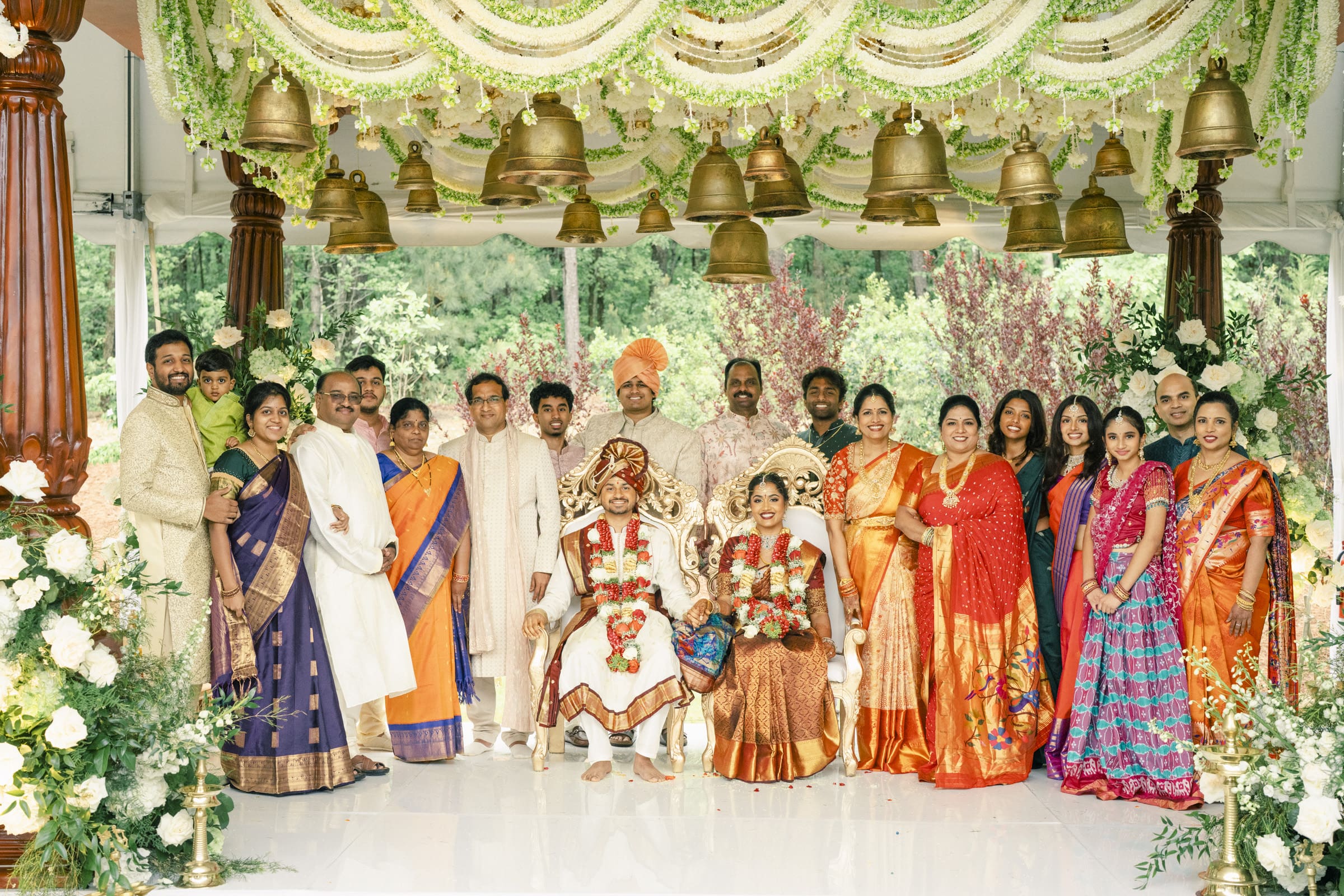
When events are scattered across the evening—a first dance, dinner, cake cutting, more dancing, speeches and then another announcement—the dance floor repeatedly opens and closes. Every interruption asks guests to stop participating and become an audience again.
Consider grouping your major formalities into one or two clear blocks. Introductions, the first dance and parent dances can happen together. Toasts and cake cutting can take place during dinner.
Once the dance floor opens properly, let it remain open.
This gives the party time to develop naturally and creates space for the gloriously unfiltered photographs that happen once everyone stops worrying about what comes next.
A Quick Note About Phones
I don’t believe every phone has to disappear for the entire wedding. The problems begin when guests step into the aisle, extend screens into important sightlines or stand beside the photographer during family photographs.
Phones are manageable. Tablets—and, yes, I have seen laptops—are a different proposition.
If you don’t want a completely unplugged ceremony, ask guests to remain in their seats, keep devices out of the aisle and allow the professional photography team room to work.
For more thoughts on the subject, read my guide to the advantages of an unplugged wedding.
Bonus: Reconsider Paying for a Late-Night Sparkler Exit
Sparkler exits can look great. They are also somewhat overrated.
The exit itself lasts a few seconds and will usually result in a relatively small number of final photographs. If keeping your photographer until the end of the night means adding several hours of coverage, consider whether those hours—and the additional cost—reflect what you value most.
You have three main options:
- Stage an earlier exit: Follow it with an “after-party” so guests understand that the celebration isn’t actually ending. Some DJs dislike this approach because interrupting the dance floor can make it harder to rebuild momentum, but it can work well when planned carefully. If you have a live band, schedule the staged exit during one of their breaks.
- End photography after an hour of open dancing: This is usually enough time to document the atmosphere, important people and increasing levels of chaos without paying for several additional hours of repetitive dance-floor coverage.
- Skip the sparkler exit altogether: If it doesn’t hold any particular meaning for you, don’t feel obliged to include one simply because it appears in other wedding galleries.
If your exit includes something personally meaningful, a genuine surprise or an ending you’ve always imagined, then absolutely photograph it. But don’t spend thousands more simply because you feel every wedding gallery is supposed to end with sparklers.
Use that money for something you’ll value more—or spend it on the honeymoon.

A Good Timeline Creates Possibilities
The purpose of a wedding timeline isn’t to control every moment. It is to protect the things that matter while leaving room for the unexpected.
Build breathing room into the morning. Understand how sunset affects your portrait time. Make traditions more efficient where you can. Then trust the experienced people you hired to respond to what is actually happening.
The photographs that mean the most are rarely produced by following a minute-by-minute script. They come from giving people enough time and space to be themselves.
If you’re planning a wedding in Raleigh, Durham, Chapel Hill or elsewhere in North Carolina, you can explore my complete wedding photography planning guide or get in touch to tell me what you’re planning.
My approach centres on honest moments, meaningful portraits and photographs that belong to your wedding—not anyone else’s.